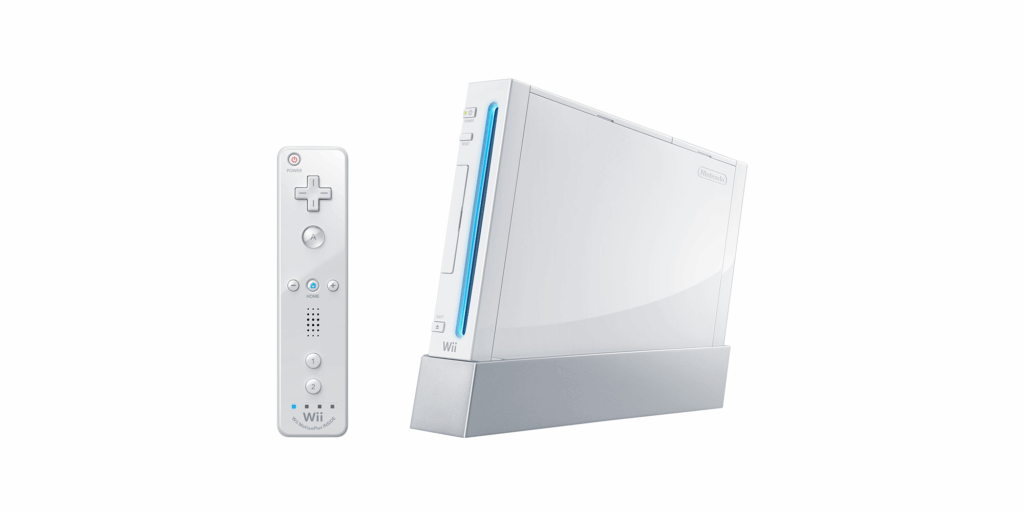
The Wii was one of Nintendo’s most successful consoles of all time. Launched in 2006, it tapped into both the casual gaming market and the core gaming market and sold over 101 million units in its lifetime. But what made this unique console such a hit?
Nintendo’s struggling Home Console Business
The year was 2003, the Nintendo GameCube line had been struggling. Each Nintendo home console after the massively successful Nintendo Entertainment System (NES) had seen significant decline in sales. With new competition from Microsoft with their Xbox and the Playstation 2 absolutely dominating the market, Nintendo had to figure out how to save their sinking ship.
Setting sail on the Blue Ocean
With Iwata being recently appointed as the new company president, Iwata had stated that Nintendo had fallen quite behind on industry trends. He wanted the Nintendo’s next console the Wii (appropriately codenamed Revolution) to focus on the key aspect of creating new gameplay experiences that everyone can experience. Historically, consoles would compete on how much raw computing power they can put out as well as the graphical details they can display. But Iwata and his fellow Nintendo employees questioned this precedent and wanted to design something unique and accessible that more people can experience even if they had never played a video game before. To achieve this, the Wii took some inspiration from some existing unconventional experiences such as the dance pad used in Dance Dance Revolution as well as Nintendo’s own DS touch screen which was experiencing tremendous success with the casual audience. At the same time, the Wii needed to be competitively priced compared to its competition.
Challenges Nintendo Needed to overcome
Shifting Focus from Power to Gameplay: A major challenge was intentionally moving away from the industry trend of competing solely on graphical power and processing speed. This required a fundamental shift in design philosophy and convincing stakeholders that innovation in gameplay interaction could be more valuable.
How Nintendo overcame this: Nintendo deliberately chose not to compete directly on processing power, recognizing the escalating costs and potentially diminishing returns of that “arms race.” Instead, they focused resources on innovating the gameplay experience itself through the unique Wii Remote. They justified this by aiming for and successfully creating entirely new kinds of fun and accessible experiences that appealed to a broader audience, proving value beyond just computational capability.
Designing a New, Accessible Interface: Creating the Wii Remote involved significant hurdles. It needed to be intuitive and comfortable for everyone (including non-gamers), reliable, responsive, and suitable for various game types, breaking from complex, traditional controller designs.
How Nintendo overcame this: Through extensive iteration and prototyping, guided by the core principles of making it “Simple” and “Comfortable.” They explored many ideas before settling on the familiar remote shape. The design focused on making people want to pick it up and try it, rather than feeling intimidated.
Meeting Strict Size and Power Constraints: Iwata mandated a very small console size (like 2-3 stacked DVD cases) (the console needed to be small so it could fit near the TV as it had a sensor bar attachment needed for the controllers). This created engineering challenges in fitting components and managing heat dissipation, especially given the goal of low power consumption for the “always on” WiiConnect24 standby mode without noisy fans.
How Nintendo overcame this: The small size was a defined goal from early on, forcing engineers to find solutions. This involved using power-efficient components rather than the most powerful available and requiring close collaboration between chip designers (to minimize heat) and casing designers (for cooling). Achieving the low-power, silent operation for WiiConnect24 standby mode was a specific target that guided these engineering efforts.
The Wii Remote
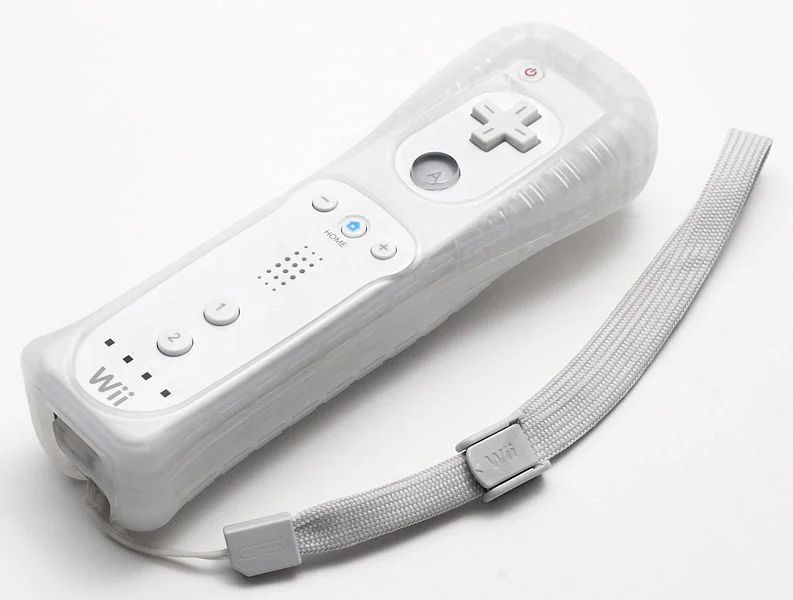
The Wii Remote was what differentiated the Wii from consoles past and present. The remote resembles a TV remote that can be held in a single hand vertically, or held in both hands horizontally in a similar fashion to traditional game controllers. The Wii Remote uses an IR tracking camera as well as gyroscopes and accelerometers to track the user’s motion and allow for a point and click interface. The controller also supported numerous accessories through its expansion port on the bottom allowing for devices such as the Nunchuck and Classic controller to provide a more traditional gaming experience as well as future enhancement like the Wii MotionPlus.
“So, the conclusion I came to was that home consoles needed a new interface which anybody could use without any difficulty. It needed to be something that would allow non-gamers to play without feeling self-conscious.” -Shiguru Miyamoto.
The Wii Remote was revolutionary in its motion control technology and simplicity. The motion controls allowed anyone to pick it up and play games with minimal instruction. Games like Wii Sports demonstrated this perfectly in its sports games like Bowling, and Golf. If you want to bowl, swing your Wii remote like you are actually bowling, if you want to golf, swing the remote like a golf club (but make sure you wear the wrist strap so you don’t break your TV!).
The Games
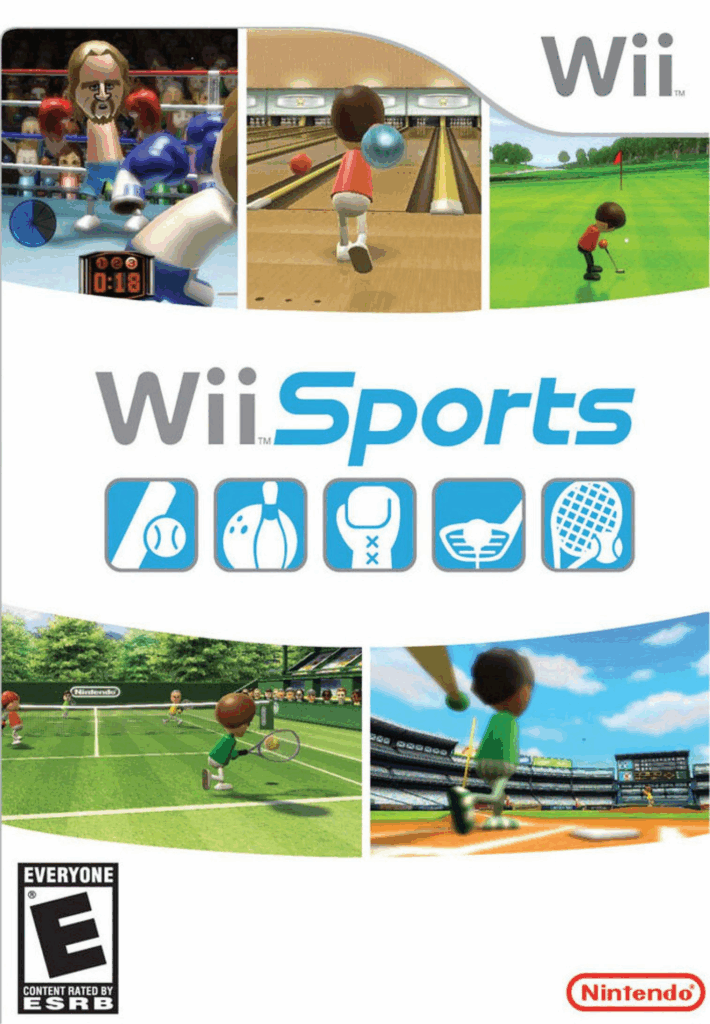
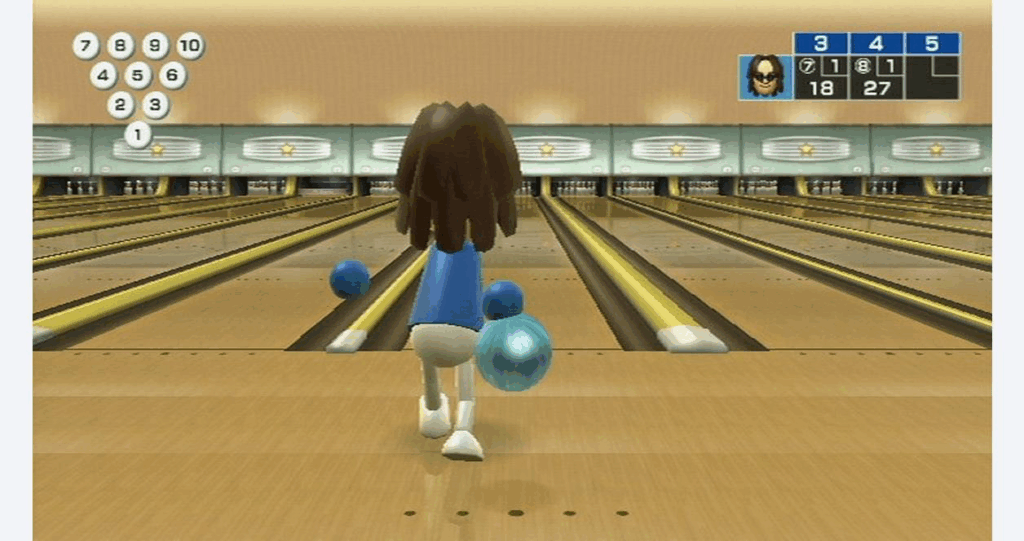
The success of every video game console hinges on the games it has to offer. Fortunately, Nintendo created tons of high quality games for people to experience on Wii that utilized the Wii’s unique hardware and couldn’t be replicated on other platforms. Games such as Wii Sports (which was a pack-in title with the console in the US thanks to Reggie Fils-Amie) and its sequel Wii Sports Resort, captured the attentions of all ages. Being able to play sports like Tennis, Baseball, Golf, Bowling, and Boxing in the confort of your living room was a completely novel experience. Games like Mario Kart Wii expanded on the already successful Mario Kart series with motion controls allowing users to steer just by tilting their Wii remote. Wii Fit utilized a unique smart scale peripheral (the Wii Balance Board) and aimed to make getting fit at home fun for all ages. Other games like Just Dance brought dance parties to the living room scoring their dance moves with just a Wii Remote. Nintendo also released some more traditional titles as well such as New Super Mario Bros. Wii, and Super Mario Galaxy.
In addition to the new experiences on Wii, the Wii also offered support for existing GameCube games as well as downloadable classic titles from older systems via the Virtual Console service on the Wii Shop Channel. This meant that there was something for everyone to play.
Response from the competition
Both Sony and Microsoft recognized Nintendo’s genius approach to capturing the casual market and attempted to respond to the Wii’s unique appeal for the casual market with creating their own motion controllers for the Playstation 3 and Xbox 360 respectively. In Microsoft’s case the Xbox Kinect was a camera peripheral for the Xbox 360 that allowed a user to play games using just their body movement. In Playstation’s case the Playstation Move controller was released which directly mimicked the Wii Remote’s capabilities. However, these accessories struggled to catch on the same way due to the Wii’s capabilities being part of an integrated system rather than an add on, the cost of these technologies (on top of the Xbox 360 and PS3 being expensive consoles), lack of developers willing to support these technologies, and the fact that these systems were targeted towards the core gamer demographic rather than the casual market like the Wii.
Impact
The accessibility of the Wii and its games such as Wii Sports led the Wii being popular not just amongst children but parents, retirement homes, hospitals, and more. The Wii tapped into the casual market in a way never seen before in a video game system. The Wii popularized the idea of motion controls for games and Nintendo (as well as other publishers) have continued to put out games that support this simple control scheme up to the present day. It also brought Nintendo back into the spotlight of the gaming industry.
Even though the Wii was a massive success, it experienced a sharp decline in sales in its later years. Specifically, the Wii utilized significantly outdated technology from a processing, display, networking, and graphics perspective which caused third party developers creating games that appeal to the core gamer demographic to abandon the Wii and focus on other platforms. Furthermore, the advent of smartphone gaming through the App Store and Google Play greatly appealed to the casual market the Wii once championed. Going forward Nintendo would have to refocus on capturing the core gaming market as well as providing gaming experiences that can rival those on smartphones. (Unfortunately, it would take them a massive and costly misstep to realize this with the failure of the Wii U).
References:
Inoue, Osamu (2009). Nintendo Magic: Winning the Video Game Wars. Translated by Paul Tuttle Starr. Tokyo, Japan: Vertical (published April 27, 2010). ISBN 978-1-934287-22-4.), (https://iwataasks.nintendo.com/interviews/wii/wii_console/0/0/
Nintendo Co., Ltd. (n.d.). IR information: Sales data – Hardware and software units. Nintendo Co., Ltd. Retrieved May 4, 2025, from https://www.nintendo.co.jp/ir/en/finance/hard_soft/index.html
Nintendo. (2006, September 9). Iwata Asks: Wii console (Vol. 1). Nintendo. https://iwataasks.nintendo.com/interviews/wii/wii_console/0/2
DidYouKnowGaming?. (2015, May 9). Nintendo Wii – Did You Know Gaming? Feat. Rated S Games [Video]. YouTube. https://www.youtube.com/watch?v=4VUu5NTKFIU
Gaming Historian. (2015, November 23). The life of Satoru Iwata [Video]. YouTube. http://www.youtube.com/watch?v=k4cJh2YgrKE&t=1463
Google Gemini 2.5 Pro was used for assistance in writing this article.